Wednesday, March 05, 2008

Pomegranate 9.2

I've been remiss in not noting the contents of the latest issue of The Pomegranate: The International Journal of Pagan Studies. Videlicet:

• "The Quandary of Contemporary Pagan Archives,"
Garth Reese,

• "The Status of Witchcraft in the Modern World," Ronald Hutton,

• "Kabbalah Recreata: Reception and Adaptation of Kabbalah in Modern Occultism," Egil Asprem

• "Putting the Blood Back into Blót: The Revival of Animal Sacrifice in Modern Nordic Paganism," Michael Strmiska.

And the book reviews.

Abstracts are online, and the book reviews may be downloaded in their entirety.

Labels: , , , ,

Monday, February 25, 2008

Gallimaufry with Bar Graphs

• Learn all about American religious affiliation from the Pew Forum on Religion & Public Life -- until you get to us. We are in the "Other Faiths" category under (sigh) "New Age." Notice how the Jews and Hindus score highest in education, the evangelical Protestants and JW's lowest.

• Utra Press, the publishers of the journal Tyr now have their own web site.

• Isaac Bonewits is starting his own magick school. Jason Pitzl-Waters has the details.

Labels: , ,

Saturday, February 16, 2008

After the Witch Queen Steps Down: Maxine Sanders' Fire Child

In the 1960s, when Pagan Witchcraft started to gain widespread media attention, Maxine Sanders (b. 1948?) was one of its visible faces. A tall willowy young woman with bleached blonde hair, she was married in 1965 to Alex Sanders (1926-1988) for whom the Alexandrian tradition is named.

He was older, charming, verbal – she was photographed, his words were recorded. That’s her on the cover of my early hardback edition of Stewart Farrar’s 1971 book What Witches Do, long hair flowing, eyes downcast towards the chalice.

Now she talks -- in print as opposed to classes and lectures -- in a valuable autobiography, Fire Child: The Life & Magic of Maxine Sanders, 'Witch Queen'.

The book is not what it could have been. Material is not always straight-forwardly organized, punctuation is erratic and unclear, and words usedly mistakenly (“taught” for “taut,” “vice” for “vise,” that sort of thing). I fault the publisher.

Still, this is an important book. Sanders gave her life to the Craft in a way that few have, and she admits she paid a price: two failed marriages (Sanders, in the end, preferred men), financial hardship in the early years, breast cancer, and, most of all, the hardship of being always on-call in her role as priestess.

Marriage with Alex had been rather like a working relationship. Unconsciously, we sacrificed the more personal and sharing aspects of a normal marriage.

To read Fire Child is follow a trail of ups and initiations, rituals and happenings, magical politics, festivals and and visions.

Yet it is also a frank admission of the dangers of magickal religion. Coming from a background of intense, small-group work, she is prone to opinions such as these:

The modern Craft is a victim of its own success. Its tremendous growth since the heady days of the 1960s has outstripped the availability of experienced and reputable teachers, who in former days would themselves have served an arduous apprenticeship before being judged worthy to passon the tradition – and then only to a few.

(And she admits that even in her own group that rule was not always followed.)

Witchcraft is so often perceived as a young person's religion that it is good to read a mature priestess’s thoughts. Maxine Sander has gone through the fires – media celebrity, high-profile religious leadership, magic, suffering. Her book is valuable – “full and candid,” to quote Ronald Hutton’s cover blurb. I recommend it.

Labels: , ,

Wednesday, January 23, 2008

Gallimaufry: It's Traditional

¶ When an ill-informed blogger writes that "Wicca Attempts to Control Life" on a right-wing site, commenters weigh in. The gist: (a) religion has nothing to do with politics or (b) all religions are bogus. It's nice to see street-level libertarianism thriving.

¶ Maxine Sanders' new autobiography Fire Child: The life & Magic of Maxine Sanders, 'Witch Queen' is on my to-read list. She says the first mid-1990s draft was it badly written, self-indulgent and absolute rubbish. And then she adds something that is true of all memoir-writing:

When I did start work on Fire Child there were details that were not recorded in my magical diary and should have been. However, magical life is often repetitive and would have proved boring to the reader. On reflection, the differences between memory and diary entries made fascinating personal analysis.

Update: Another reviewer discusses some inconsistencies in the book but still recommends it.

¶ Volume 3 of TYR Myth-Culture-Tradition has been published, and I am just starting to read it.

This third issue is a big one, 530 pages, with articles such as Nigel Pennick on "Weaving the Web of Wyrd," Joscelyn Godwin on "Esotericism without religion: Philip Pullman's His Dark Materials," and Christopher McIntosh on "Iceland's Pagan Renaissance," plus many pages of book and music reviews. Impressive.

Labels: , , , ,

Thursday, January 10, 2008

A Feeling of Accomplishment, Sort Of

I feel all loose and floaty, for I have just completed . . . a book review.

It was all of 1,100 words. It took me three days. That's sad--I should be able to write 1,100 words just loosening up my fingers.

But it was of a book that I admire and for an academic journal in which I am trying to publish a longer article (not The Pomegranate but another journal.)

So it was almost like writing a response paper: "The authors make points X,Y, and Z. Which one was salient? Which sentences should I quote?" And so on.

Obviously, I cannot post the review here before it appears in the journal, but at some point maybe I can make a link from my book review page.

Labels: ,

Monday, November 12, 2007

Gallimaufry is not a Irish Word.

¶ Dude, it's like this secret Irish slang, you dig? So don't be a twerp--glom onto this.

On the other hand, be careful of enthusiastic folk etymologists with a pocket dictionary and an agenda. It could just be a gimmick.

Time and Mind is a new journal of postprocessual archaeology: "The journal features scholarly work addressing cognitive aspects of cross-related disciplines such as archaeology, anthropology and psychology that can shape our understanding of archaeological sites, landscapes and pre-modern worldviews."

¶ Blogging will be light for the next few days. I have to ride the big silver snake to Southern California and the American Academy of Religion annual meeting. Berg should have a booth there--maybe I can find the journal.

So many bloggers go to events and post pictures of exhibitor booths and shots of happy people in hotel bars. I will try to avoid that -- unless I get something really good.

I will be checking out the possibility of freelance work too, which adds an extra urgency to the trip.

Labels: , , ,

Wednesday, October 24, 2007

A Manufactured Conspiracy in Wiccan Publishing

I have started reading Aidan Kelly's Inventing Witchcraft: A Case Study in the Creation of a New Religion, published by Thoth Publications but also available from Amazon.

In simplest terms, it's an enlargement and reworking of Crafting the Art of Magic, Book 1, which Llewellyn published in 1991--Kelly's study of the origins of modern Wicca, based primarily on textual criticism of various versions of the Gardnerian Book of Shadows.

Kelly published one earlier article on the BoS in my own zine, Iron Mountain: A Journal of Magical Religion, which had a run of four issues from about 1984-1986. It is sort of fun to see it referred to again.

Because there was only Book 1 and no Book 2 back 15 years ago, a whole conspiracy theory has arisen, for example, that American Gardnerians somehow had the book suppressed. Even Thoth's copywriters can't resist: the back-cover copy reads, in part, "When the first edition of thisbook was released, conservative Gardnerian Witches attempted to suppress it....Even though its first printing quickly [!] sold out, the original publisher, faced with death threats and boycotts, agreed to abandon the project..."

Horse shit. Elephant dung. Monkey poop. Here are some facts:

1. Llewellyn typically then (and now, I suppose) kept first runs short, usually under 5,000 copies. If sales were good, more copies would be ordered in similar increments. Even one of their top Wiccan authors, Scott Cunningham, was selling only in the mid-five figures at that time.

2. Shortly after Crafting was released, I flew to Minnesota to spend a couple of days with Carl and Sandra Weschcke, who own Llewellyn, and then-acquisitions editor Nancy Mostad, discussing the series that I was editing for them and possible other projects.

On our way to dinner the first night, Carl asked me if I knew when Kelly would send the ms. for Book 2. He wanted to publish it. After thirty years in the occult publishing business, he probably treated the displeasure of his reading public less seriously than he treated Minnesota mosquitoes. Death threats indeed. Controversy is good for publishers, as Thoth is obliquely admitting by trying to manufacture some.

3. But Kelly's own problems at the time prevented him from ever delivering the manuscript. With no Book 2 in the pipeline, Book 1 was allowed to go out of print -- as the majority of Llewellyn titles do after their first press runs. No conspiracy there, just business.

Since Amazon advertises used copies of Crafting at prices from $46 to more than $150, you get much more by buying the new book, despite the cover hype. I have some minor issues with it -- I wish that it more reflected research into Wiccan origins done since the first book was written -- but it is still worthwhile.

Thoth also has reprinted Dolores Ashcroft-Nowicki's The Forgotten Mage. It is a key background book in the emergence of contemporary Paganism from the milieu of early 20th-century ceremonial magic and esotericism.

UPDATE 10/25: Greetings if you came here from Wildhunt. (Thanks, Jason.) As I hope I made clear in my response to one commenter, I don't want to turn a discussion of this dubious book marketing into a pro/con discussion about Dr. Kelly and his difficult relationship with other American Gardnerians. Don't want to go there, OK?

Labels: , ,

Tuesday, September 18, 2007

The Right Architecture for Reading

M. and I played hooky and went to Taos last weekend. I spent part of two mornings reading In Search of Zarathrustra (interview with author Paul Kriwaczek here).

The book is both an exploration of how Zorastrian ideas influenced Western monotheisms and an travel book about Iran, Afghanistan, and other regions of Central Asia.

It seemed right to read it on the patio of El Pueblo Lodge, surrounded by adobe walls, because as Kriwaczek reminds his readers, the word paradise comes from the Persian for walled garden, and many of those walls must have been mud brick.

The old parts of Taos follow the Middle Eastern/Mediterranean model: walled off from the street and easily fortified. I am acutely aware of the difference when I come home to my own house, built in the Celto-Germanic model: rectangular and decorated with antlers.

Labels: ,

Wednesday, August 15, 2007

Purging books

M. and I in the middle of some home remodeling, just painting and staining after the contractor has finished, and otherwise putting things back together.

In the past, when we moved into a new house or apartment, we claimed our territory by first doing a fire-bowl purification, followed by building brick-and-board bookcases.

Yep, here we are, still decorating in Early Grad Student Style, more timeless than Colonial or Mission or Louis XIV.

Now we have a new panoramic view of the Wet Mountains, spread across two walls -- and less room for bookcases. The purge is on, and it ripples from the livng room through the bookcases in the study and the bedroom too.

I stand in front of a bookcase with cardboard cartons at my feet. The books by the Pulitzer Prize-winning poet whom I quote in everything I write -- those stay. The books by the Pulitzer-winning poet whom I admire but never really "got" -- they go into the box for the student literary club's fall fund-raising book-sale.

A friend who shares the "small house, many books" situation says "No extra space, and no books I want to purge!" There is defiance for you. But he is a writer in a tiny town, thirty miles from a half-decent library. And he wants to keep his rectangular friends close. I understand.

Maybe getting rid of books makes room for new books: new friends, new ideas, new experiences.

But it is a sad process too. It is realizing that I will never make time to learn XYZ or that technological changes have made my books on EFG obsolete. It is saying farewell forever to the me who was interested in PQR.

So far I have filled two cartons for the university literary club's fund-raising book sale, one our little two-room public library, and one of the university library, if they want them.

And then I sit on the sofa and watch a distant thunderstorm flicker on the ridges through our new double-glazed casement windows.

Labels: ,

Wednesday, July 18, 2007

Read a M*F* Book

You have wonder what Zora Neale Hurston would say at seeing her work promoted in this video:


Maybe she would be cool with it. (Definitely NSFW, by the way.)

(Via an LJ community for desperate librarians.)

Labels: ,

Wednesday, July 11, 2007

Pomegranate 9.1 (June 2007)

Contents of the newest issue of The Pomegranate: The International Journal of Pagan Studies:

Marisol Charbonneau, "The Melting Cauldron: Ethnicity, Diversity, and Identity in a Contemporary Pagan Subculture."

Carole Cusack, "The Goddess Eostre: Bede's Text and Contemporary Pagan Tradition(s)."

• Victor Schnirelman, "Ancestral Wisdom and Ethnic Nationalism: A View from Eastern Europe."

Boria Sax, "Medievalism, Paganism, and the Tower Ravens."

• Mikirou Zitukawa and Michael York, "Expanding Religious Studies: The Obsolescence of the Sacred/Secular Framework for Pagan, Earthen, and Indigenous Religion."

• Book reviews.

Labels: , ,

Tuesday, June 12, 2007

Let's Hear It for BP605.W53!

When you visit a university library that uses Library of Congress call numbers, are you tired of finding books on Wicca in the BF's along with abnormal psychology?

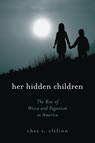
(For example, my book Her Hidden Children is at BF1566 .C55 2006. At least The Paganism Reader made it into the BL's, the religion category.

But now, according to a professional librarian on one of the lists that I read, things are changing:

It took them long enough.... but not nearly as long as the change from Moving pictures to Motion pictures.

If anyone cares, here's what the official subject heading looks like, complete with cross reference and literary warrant:

053 0BP605.W53
150 Wicca
450 Wica
550 Neopaganism
550 Witchcraft

And there's now a specific LC classification number as well. Dewey number is 299.94.

Labels: ,

Wednesday, June 06, 2007

Gallimaufry

¶ All genuine religions have torchlight processions (Clifton's 3rd Law of Religion), but how do you make a torch? This guy has answers. For more Neolithic fun, make your own rock-and-plant-fiber oil lamp. He has instructions for that job too. It's all a metaphor for living.

¶ I have been remiss in not thanking Anne Hill for her review of Her Hidden Children.

¶ Summer library program yanked after claims of witchcraft. That's Greenville, South Carolina. I will be in nearby Spartanburg all next week. Luckily, I do not own any tie-dyed T-shirts. (Via Wren's Nest.)

¶ Some Danish Pagans decided to make a religio-political statement--with a large stone. Take that, Harald Bluetooth!

¶ Some Greek Pagans are now able to use ancient temples, although bureaucratic delays persist.

Labels: , ,

Saturday, June 02, 2007

Book-signing at Isis

Come Saturday, I will venture into the bustling hive of northern Colorado, where all the people drive shiny cars, to give a little talk and sign copies of Her Hidden Children: The Rise of Wicca and Paganism in America at Isis Books.

Time: 3 p.m.
Date: Saturday, June 9
Place: Isis Books, 5701 E. Colfax Ave., Denver
(Colfax at Ivanhoe)

Y'all come if you live in the metro Denver area.

Labels:

Tuesday, April 03, 2007

See, this is fame

In the postal mail and email:

1. Two fat envelopes bearing mss. of how-to Witchcraft books from publishers who want my name on a cover blurb. Neither came from Woodbury, Minnesota, however. How quickly they forget, eager to move on to the hot new titles in astral sex.

2. An email from someone who shares my surname. My name had come up both her genealogical research and her Pagan research, so "[I] believe that I am supposed to contact you." Her son is a "sorcer" with a "great destiny" too. Yowie.

They claim descent from the Cliftons of Cornwall. Maybe so. It's a geographical name (meaning, literally, farm under/by the cliff), so it can pop up anywhere the Angles and Saxons went, but my family lore always said that we came from some Cliftons in the north of England, possibly County Durham.

Of course, family lore and $2 will get you a cup of Starbucks coffee.

3. A Colorado author wrote me a letter, wanting permission to reprint photos from my first-ever book(let), Ghost Tales of Cripple Creek.

"You are hard to track down!" she writes.

If only. See item no. 2.

Labels: ,

Wednesday, February 28, 2007

No apostrophes, no vampire elves

When it comes to reading the titles and cover blurbs of SF/fantasy books, I am with Timothy Burke:

Other things that are likely to drive me off:

1) “Book One in the Dark Swords of Black Terror Trilogy”.
2) Mostly, if the word “vampire” appears anywhere in the cover, title or blurb. It stops being “mostly” if “vampire” appears in the same blurb with “elf”.
3) Titles or blurbs that contain the name of a fantasy kingdom that sounds more like a prescription medicine for depression or impotence.
4) Anything that contains three of the following four elements in the blurb: plucky but innocent young heroine, farmboy with a destiny, dark lord of evil, wise ancient wizard. “Handsome voodoo priest” is a bonus demerit.
5) The word, “Drizzt”.

Labels:

Wednesday, February 14, 2007

Blog Valhalla, Polytheism, Books and More

¶ Yvonne Aburrow's Pagan theologies wiki has what might be the definitive list of active Pagan blogs. I am adding a link on my sidebar.

¶ Speaking of which, this blog now appears on BeliefNet's Blog Heaven page again. Thanks to everyone who made a fuss.

¶Bedside reading: I started, put aside, but will return to John Lamb Lash's Not in His Image: Gnostic Vision, Sacred Ecology, and the Future of Belief.

It is a difficult book for me to evaluate: I sympathize with Lash's point of view, but I think that he distorts some of his sources too much in order to support his views. He wants to use Gnosticism as a path that "can provide the spiritual dimension for deep ecology independently of the three mainstream religions derived from the Abrahamic traditions."

Gnosticism is still concerned with "salvation," a concept largely at odds with polytheism, as John Michael Greer points out (see below). Much Gnostic thinking disparages physical existences as a "mistake," so I am waiting to see how Lash reconciles that with deep ecology and its focus on our relationship with and as a part of nature.

Lash writes his introduction around the life of Hypatia of Alexandria, a Platonic philosopher murdered by a Christian mob in 415 CE. He wants to view her as an "urban shaman," but I see her more as today's tenured professor of mathematics. An intellectual through and through. Note how she elevates philosophy over erotic attraction this story of her teaching, true or not.

Reviewing Not in His Image in the Los Angeles Times, Jonathan Kirch writes:

Lash is capable of explaining the mind-bending concepts of Gnosticism and pagan mystery cults with bracing clarity and startling insight. At moments, however, he slips into a kind of New Age rant as baffling as any mystical text. "What we seek in 'Gaia theory' is a live imaginal dimension," he writes in one such passage, "not a scaffolding of cybernetic general systems cogitation." . . . .

And when he considers what he calls the "sci-fi theology" of the ancient Gnostics, he comes uncomfortably close to affirming that the otherworldly "Archons" of Gnostic myth were authentic extraterrestrials.


An interesting book, but full of special pleading.

¶I am happier with John Michael Greer's A World Full of Gods: An Inquiry into Polytheism, published by the Druidic group Ár nDraíocht Féin.

Greer's arguments for polytheism as offering a better model of the universe (including the evil and suffering in it) than monotheism and his lucid explanation of polytheistic spirituality deserve a wide hearing.

He works hard to show that monotheistic thinkers simply do not comprehend the polytheistic experience, and their arguments against it (unless enforced by violence as in Hypatia's case) simply fail.

Indeed, ancient and modern Pagans alike have the described mystical states in which they have become aware of multitudes of divine beings filling every corner of the cosmos; in the words of the Greek philosopher Thales, they have seen that "all things are full of gods." This is the polar opposite of henotheism; it is also among the most powerful and transforming of Pagan religious experiences.

Labels: , , ,

Tuesday, February 06, 2007

The Invisible College online magazine

Bridging the gap between the print Pagan magazines of a few years back (Green Egg, anyone?) and Websites that you lose interest in, what with the flaming pentagrams and white-on-black type, The Invisible College is a downloadable magazine in PDF format. Entheogens, trances, shamanism, art . . .

In fact, one contributor is Diane Darling, formerly of Green Egg.

"Invisible College" has a couple of antecedents. Sometimes it is a nickname for The Royal Society. But that nickname itself comes from a time -- typically the 16th century -- when science and esoteric thought were not so far apart, with the same men studying astronomy as science and casting horoscopes.

Fifty-two pages. Worth (dare I say) printing out.

Labels: , ,

Friday, January 19, 2007

The Nigerian (419) Book Scam

In the early 1980s, M. and were dues-paying members of the Fellowship of Isis--sort of a souvenir of our honeymoon in Ireland, when we made a couple of visits to Clonegal Castle, its headquarters.

Our contact details were published in the FOI newsletter, which brought several letters to us from Nigeria.

They always took the same form: "Dear Glorious Wonderful Adepts . . . I so much want to learn blah blah blah . . . Please send me all of the books that you have . . . for free."

Having received a bunch of these letters, I was pretty well inoculated against the "419 scam." You get those emails too, I am sure: the widow of the minister of something-or-other who has millions of dollars stashed in a bank account, and only you (or some other sucker) can help her retrieve them, with the help of God, of course.

(Lots of sample letters here, and if you want to have a little fun scamming the scammers, here are some helpful hints.)

So it was a blast from the past when Llewellyn forwarded to me this week a letter from one "Mr. Inemesit Sanctum" (if I read correctly) of Abia State, Nigeria.

It begins "Dear Spiritual Don," I wonder if he means "Don" in the Spanish/Italian sense, as in "Don Giovanni," or an Oxbridge academic "don." Perhaps the latter?

My edited book Living Between Two Worlds "opened his eyes" blah blah blah.

"I never knew that witchcraft could be so exciting and unassociated with the typical diabolism which I used to be told, which caused me a great dread of it."

Etc. etc. etc. And then the pitch:

"Finally, to cool my thirst, send me such books as [lists four titles from the Llewellyn catalog]. Doing this will give me and my yearning friends hope to climb the strange but exciting spiritual ladder."

No mention of payment, of course. That's the Nigerian touch. They never even offer to cover postage.

And the closing: "Yours spiritually."

Ah, nostalgia. A handwritten begging letter in this day of email 419 scams.

Labels: ,

Wednesday, December 13, 2006

Shaman's Drum's new fundraising

Timothy White started Shaman's Drum: A Journal of Experiential Shamanism & Spiritual Healing in the mid-1980s, at the same time that Jay Kinney started Gnosis: Journal of the Western Inner Traditions.

In fact, I met both publishers on the same evening in San Francisco, at a publishing gathering where they introduced their new journals. As a graduate student in religious studies, I ended up writing frequently for Gnosis, but I always subscribed to Shaman's Drum as well.

Both suffered a big hit in the late 1990s when a major distributor went under, owing them both significant sums of money. Jay Kinney closed Gnosis in about 2000 and went on to other projects; Timothy White and his wife, Judy, struggle on in Oregon.

Their latest plan is to organize a series of benefit auctions on eBay, offering such items as "traditional shamanistic craft items (drums, medicine bags and other items), original shamanistic paintings, collector's prints and photos . . . . back issues and/or discount certificatesfor workshops and tours advertised in the magazine."

They are also soliciting donated items to sell.

News of upcoming auctions is supposed to be posted on the Web site. It's not there yet, but check back later.

Labels: ,

Saturday, November 11, 2006

We have a Pagan Studies series!

Introduction to Pagan Studies by Barbara Jane Davy
With Barb Davy's Introduction to Pagan Studies, we now have three books in Rowman & Littlefield's Pagan Studies series.

And three of something truly is a "series," right?

Tag:

Labels: , , , , , ,

Saturday, November 04, 2006

A fall from a height

I am in Colorado Springs today, where famous evangelical pastor Ted Haggard's fall dominates the news.

Frankly, to borrow the name of a better-known blog, I just don't "get" his kind of religion. A 14,000-member megachurch? Why? So you can sit on your butt and be preached at and sung at among a huge crowd of strangers?

My dislike for Haggard's approach is more than theological. It is partly aesthetic--the whole megamall megachurch entertainment thing. And it's partly because of the way that New Lifers regarded the most interesting parts of Colorado Springs (such as the Old North End and Tejon Street) as controlled by Satan or something. I wrote elsewhere that they do not understand the gods of the city, only the gods of the suburban shopping mall.

One excerpt: "[Jeff] Sharlet makes a good case for New Lifers as exurban parasites, taking the services that the city provides but being unwilling to pay for them, either financially or psychically."

Anyway, he is toast now, although there will probably be some sort of public-repentence-as-career move. From a Christian perspective, LaShawn Barber's coverage is about the best.

And that's the news from "Fort God."

Tags: ,

Labels: , , , , , , ,

Thursday, October 26, 2006

Leaving the meat uncovered

Sheik Taj Din al-Hilaly, Australia's senior Islamic cleric, explains rape and how women serve Satan:

“If you take uncovered meat and put it on the street, on the pavement, in a garden, in a park, or in the backyard, without a cover and the cats eat it, then whose fault will it be, the cats, or the uncovered meat’s? The uncovered meat is the disaster.

I just felt that I needed to share that. Pagan cat-owners, please don't be offended.

Tags: , ,

Labels: , , , , , ,

Sunday, November 02, 2003

The Johm William Waterhouse Revival

The Neoclassical (or some would say Pre-Raphaelite) painter John William Waterhouse, 1849-1917, is enjoying a posthumous career illustrating books on Paganism.

His painting "The Sorceress" appears on the cover of Witchcraft Medicine -- see entry for October 29 -- while "Circe Offering the Cup to Ulysses" is on the dust jacket of Ronald Hutton's latest, Witches, Druids and King Arthur, of which I will have more to say soon.

Labels: ,

Tuesday, September 23, 2003

The Pagan cover-design dilemma (again)

Graham Harvey, my co-editor on the Paganism Reader, tells me that Routledge editors are still agonizing over a cover design. Admittedly, the one shown in the online catalog is pretty pedestrian.

It seems that there are only three choices for Pagan books.

1. A tree
2. A standing stone, as on Michael York's Pagan Theology.
3. A Pre-Raphaelite female figure in earth tones, as favored by Kensington/Citadel and other publishers of how-to books.

We will see which one we get.

Labels: ,

Wednesday, September 03, 2003

Middle Initials, part II

All a misunderstanding between Graham and the copy editor. I had signed my introductions, for example, to the Emperor Julian's "Letter to a Pagan Priest," with my initials. I had thought that Graham was doing the same with his; that's a common practice with some encyclopedias, for example. But apparently he had not, so the editor was asking if it was important for me to have my initials on my entries.

Of course not, if that's not the book style. What a commotion.

Labels:

Sunday, August 31, 2003

The Middle-Initial Problem

Now that The Paganism Reader (see July 10th entry) is in production with Routledge (pub. date early 2004?), the odd little queries from the copy editor are starting to come in. The latest involved my middle initial. It is all right to have it on the cover, but must I be referred to as "Chas S. Clifton" inside?

That's an American preference, said my co-editor, the inestimable Graham Harvey.

It makes no difference to me, I responded, although I do want the "S." on the cover because all my other writing has it. Is it really an American preference? I have no idea. But, come to think of it, I cannot think of too many British authors using middle initials.

Actually, I've always thought that "Chas Clifton" was not a good combination for pronouncing out loud. But I'm stuck with it since I picked "Chas" as a nickname when I was 10 or 11, because I did not like being "Charlie."

Labels: ,

Saturday, August 23, 2003

We're Covered

This looks to be the almost-final cover design for The Pomegranate, courtesy of Mark Lee of Hardcore Design.

Somewhere along the way the word 'international' was added to the subtitle. Perhaps that's Janet Joyce's doing. We're international, multicultural, transtemporal, and biodiversified.

And now a word from the competition: the Association for Esoteric Studies and the Society for the Academic Study of Magic.

Labels: , ,

Sunday, August 03, 2003

The Pomegranate is reborn!

After a hiatus of nearly two years while we sought a new publisher (a process that began at the American Academy of Religion annual meeting in Denver in 2001), The Pomegranate: The Journal of Pagan Studies has a new publisher and will resume print publication in May 2004.

As the new editor, replacing Fritz Muntean, I have signed a contract with Equinox Publishing, a new firm started by Janet Joyce, formerly academic editorial director at Continuum's London office. The Equinox Web site is not fully put together yet; check it at the end of August.

--The Pagan Studies book series

--The daylong Pagan Studies conference at AAR-SBL in Atlanta

--And now the return of The Pomegranate, heir, in a roundabout way to Iron Mountain: A Journal of Magical Religion and to Gnosis: A Journal of the Western Esoteric Tradition.

This will be the year that Pagan Studies happens at AAR-SBL, a slow process that has been building since 1995, when Dennis Carpenter and Selena Fox organized (and then dropped out of) the first Pagan scholars' meeting there.

Labels: , , ,

Tuesday, April 01, 2003

Wiccan books need "earth tones"?

A couple of months ago, Judy Harrow, author of several worthwhile books on Wicca, mentioned to me that publishers--or at least one of her publishers--have decided that such books' covers require (1) a pre-Raphaelite female and (2) earth tones. Check out the cover of Devoted to You, an anthology on the Pagan deities that she recently edited for Kensington Books. See what I mean?

In my darker moments, I wonder if Wicca has gone from being a mystery religion to a fashion statement in fifty years. If you're young, unconventional, angry at the world, you announce, "I'm Wiccan." You don't, however, want to say "I'm a witch," because then people expect you to "do things."

As for larger Paganism, check out this page of so-called Pagan blogs. Exactly what's Pagan about it?

Labels: , , ,

Wednesday, March 12, 2003

Reprinting "Crafting the Art of Magic"

A round of discussion on the Nature Religions Scholars Network e-mail list about the desirability of reprinting Aidan Kelly's book on the origins of Gardnerian witchcraft, Crafting the Art of Magick Book 1 (there was no Book 2), which came out a decade ago from Llewellyn Publications. Although primarily based on textual criticism applied to the Book of Shadows, the book did make some strong points about the 1940s-1950s Wiccan revival, particularly the point that Gerald Gardner and friends were creating a new religion and that that was something that humans do. On the other hand, apparently valuable parts were edited out of the Llewellyn edition, there were editing errors, etc.

I may check with the editorial director at Llewellyn to see if she would entertain the idea, but I suspect I will hit a stone wall, based at least partly on how personally miffed Carl Weschcke seemed to be back in 1992 that Kelly had not delivered the ms. for the sequel. And despite the publication of Gus DiZerega's Pagans and Christians, there is still that Llewellyn prejudice against "scholarly" books.

Labels: ,